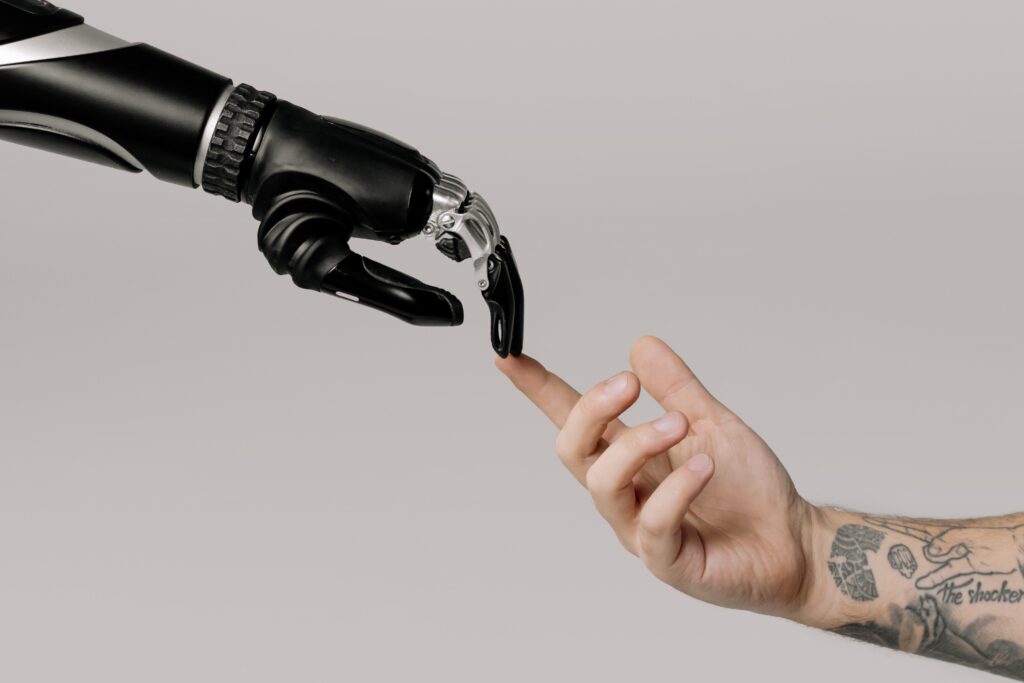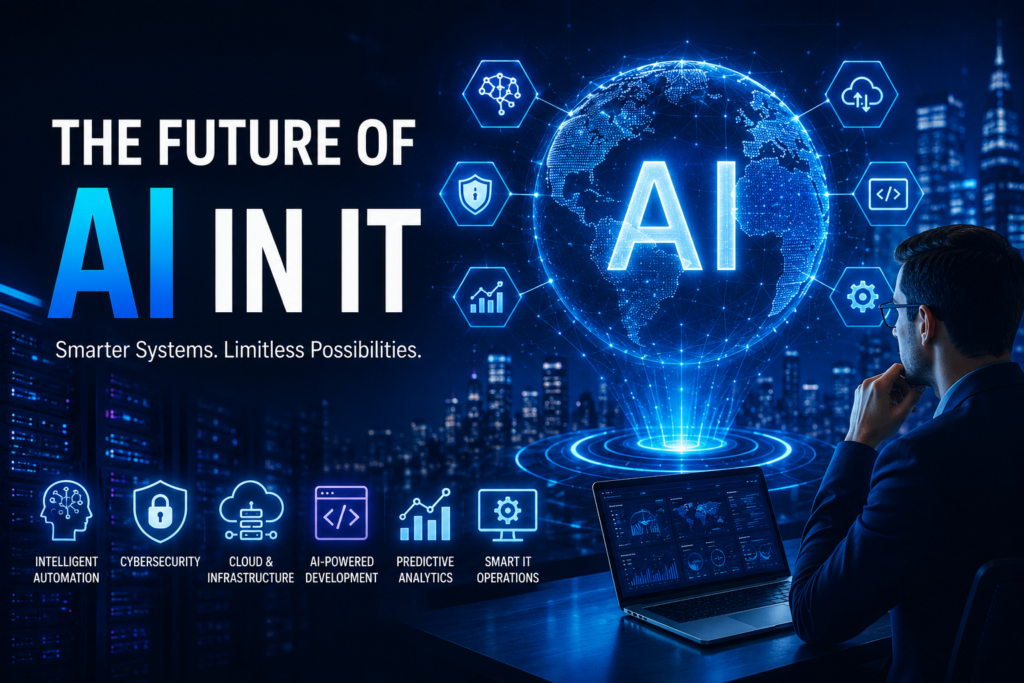
Artificial Intelligence has evolved from a futuristic idea into a transformative force in the IT industry. It is now essential in automating tasks, boosting cybersecurity, and speeding up software development, fundamentally changing how organizations operate and compete. As digital transformation accelerates, AI is becoming a cornerstone technology in modern IT environments.
The Rise of AI-Powered Automation
Automation is one of the biggest impacts of AI in the IT industry. We know that IT teams often spend hours and hours on repetitive tasks such as system monitoring, log analysis, ticket management, and infrastructure maintenance. Today’s AI-driven tools can automatically identify issues, foresee failures, and even resolve common incidents without human intervention.
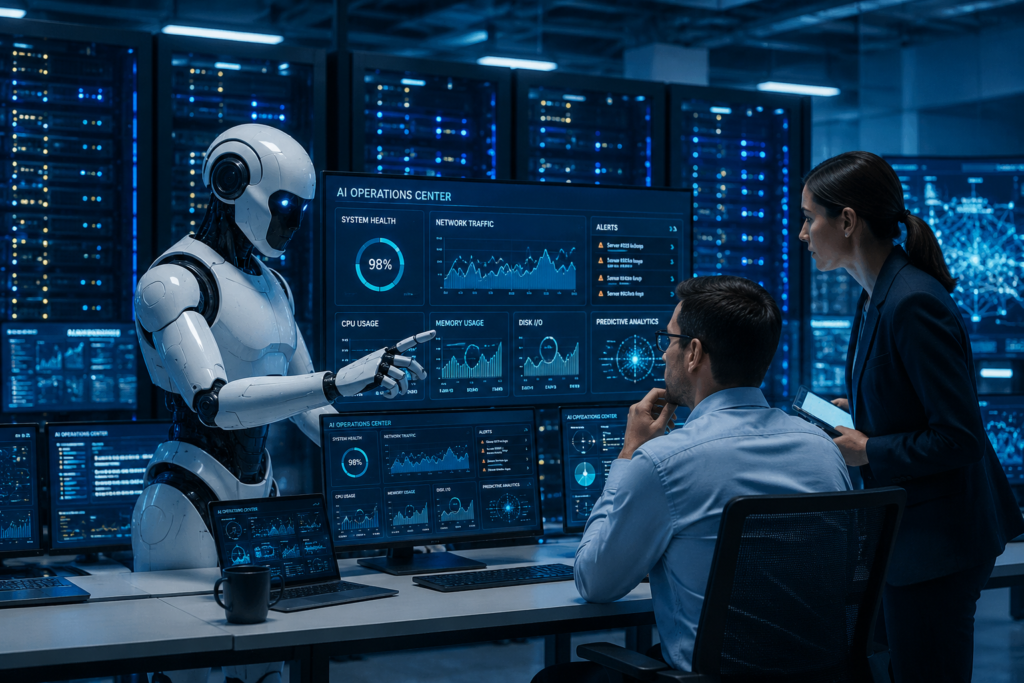
This frees up IT professionals to focus on strategic initiatives instead of routine maintenance. Companies adopting AI-powered automation report gains in efficiency, reduction of operational costs, and quicker response times.
Smarter Software Development
Software development is going through a big change thanks to AI. Modern AI coding assistants help developers write code faster, spot bugs, generate documentation, and suggest improvements. These tools not only speed up development but also enhance the overall quality of the code.
AI can also scan vast codebases to find vulnerabilities and recommend fixes before the software goes live. This cuts down on technical debt and helps companies deliver reliable applications faster.
For development teams, AI is evolving from just a tool into a true collaborative partner.
Strengthening Cybersecurity
Cybersecurity threats are getting more and more sophisticated, which makes traditional security methods less effective. AI boosts cybersecurity by constantly monitoring network traffic, user behavior, and system activities in real time. Unlike manual monitoring, AI can spot unusual patterns within seconds and alert security teams before serious damage happens.

Machine learning algorithms can detect malware, phishing attempts, and other suspicious activities that might slip through the cracks. As cyberattacks keep evolving, AI is quickly becoming an essential defense tool for organizations around the world.
Predictive Analytics and Better Decision Making
Data is one of the most valuable assets for today’s businesses, but the real challenge is turning raw information into meaningful insights. AI shines at analyzing huge amounts of data and spotting trends that people might miss. IT leaders can leverage predictive analytics to anticipate system failures, optimize resources, and plan better for the future.
Instead of waiting to react after problems arise, organizations can now tackle issues proactively – before they affect customers or operations. This move from reactive to predictive IT management is helping businesses become stronger and more efficient.
The Evolution of IT Support
Traditional help desks often struggle to handle growing volumes of support requests. AI-powered chatbots and virtual assistants are changing this landscape.
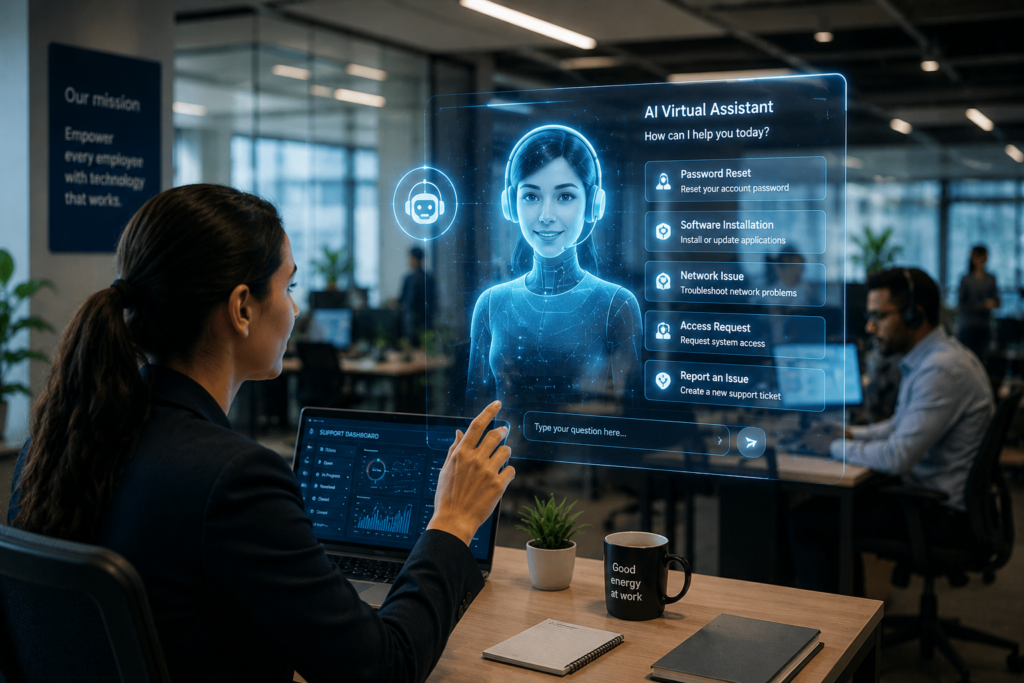
These intelligent systems can answer common questions, troubleshoot issues, reset passwords, and guide users through technical processes around the clock.
As a result, support teams can focus on complex cases while users receive faster assistance and improved service experiences.
Challenges and Considerations
While AI brings incredible benefits, organizations still face important challenges. Issues like data privacy, transparency in algorithms, security, and adapting the workforce are all critical to address. It’s essential that companies implement AI responsibly and ethically.
The aim isn’t to replace human expertise but to enhance it. The organizations that succeed will be the ones that blend human intelligence with AI to achieve the best results.
The Future of AI in IT
The future of IT is clearly tied to AI. As technology keeps evolving, we can look forward to smarter automation, more advanced cybersecurity, faster software development, and user experiences that feel more personalized than ever.
Organizations that embrace AI now will be in a stronger position to innovate, stay competitive, and adapt to the fast-changing tech world.
AI isn’t just changing the IT industry – it’s reshaping what’s possible.