Let me be straight with you.
I’ve had nights where I went to bed at a decent time, didn’t watch TV until 2am, didn’t have coffee after 6 – did everything “right.” And I still woke up feeling like I’d been hit by a bus.

You know what was keeping me up? My own head.
Lying there thinking – why am I working this hard and still not where I want to be? Why does it feel like everyone else is moving forward and I’m just… running in place?
Sound familiar?
Yeah. I thought so.
Here’s the thing nobody tells you – sleep isn’t just about hours. It’s about what happens inside those hours. And if your brain is in overdrive when your head hits the pillow, those 8 hours mean almost nothing.
Let me break down exactly what’s going on.
Your Brain Doesn’t Know You’re Trying to Sleep
Your body needs to go through multiple sleep cycles through the night – light sleep, deep sleep, REM. Each cycle is where real recovery happens. Your brain files away memories, your muscles repair, your cortisol drops.
But if something is interrupting those cycles – stress, temperature, your phone, alcohol – you’re essentially sleeping on the surface all night. You’re unconscious, not recovered.
That’s why you wake up exhausted after a “full night.” You weren’t actually resting. You were just lying there with your eyes closed.
1. You’re Thinking Too Much – And I Get It
This one hit me hard personally, so I’m putting it first.
When you’re the kind of person who works hard and still feels behind, your brain doesn’t switch off just because it’s dark outside. You replay the day. You question your choices. You compare yourself to people who seem to have it easier. You start wondering if you’re doing something fundamentally wrong with your life.
And all of that? It keeps your cortisol – your stress hormone – elevated at night. Your body stays in a low-level “alert” state. You sleep lighter. You wake up more. You feel worse.
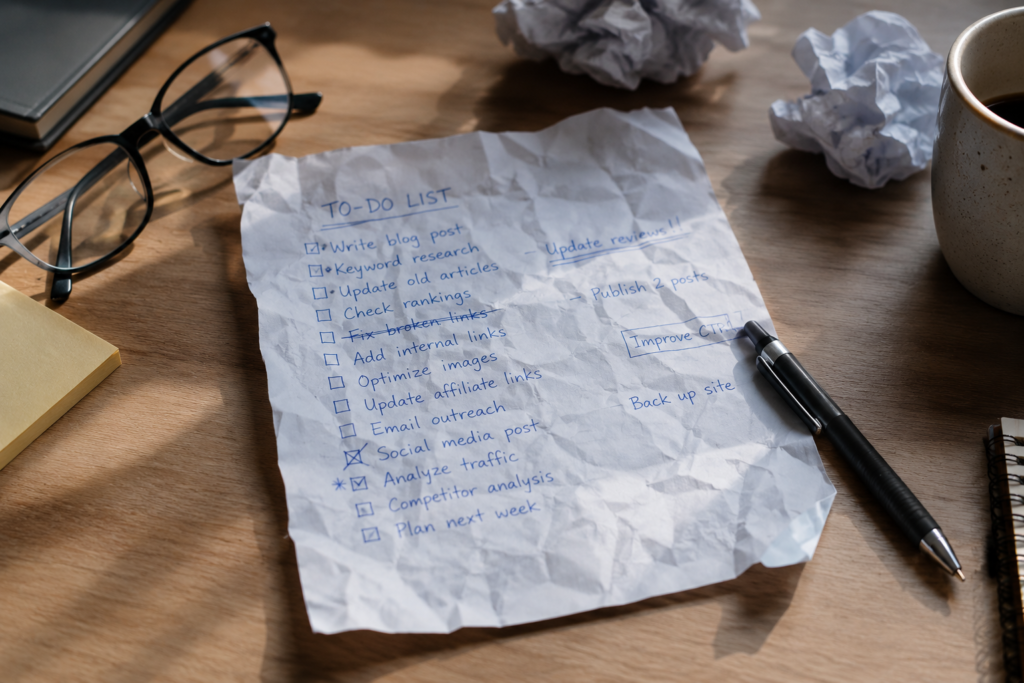
What actually helps: Before you sleep, grab a piece of paper and dump everything in your head onto it. Not journaling. Not writing beautifully. Just a messy brain dump – what’s worrying you, what you didn’t finish, what you’re scared about. Get it out of your head and onto paper. Your brain stops trying to “hold” it.
It sounds too simple. It works.
2. Your Room Is Warmer Than You Think
Your core body temperature needs to drop slightly for you to hit deep sleep. A warm room – anything above 19°C (67°F) – quietly blocks that from happening. You fall asleep fine, but you never go deep.
If you’re in Chennai like me, you already know how brutal this is in summer. The AC at 18–19°C isn’t luxury. It’s literally required for proper sleep.
Fix: Cool room. 16–19°C if you can manage it. Even a fan directly on you helps.
3. The Phone Thing – Yes, I’m Going There
You know this already. But I’ll say it anyway because knowing and doing are two different things.
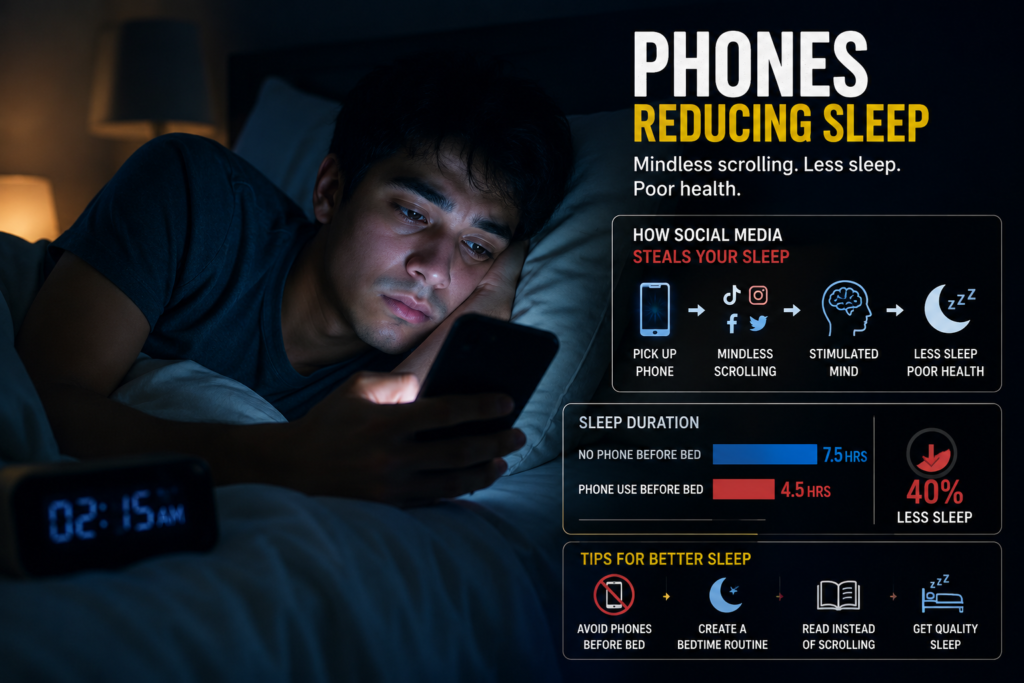
It’s not just the blue light. It’s the fact that scrolling social media or reading news puts your brain in a reactive, comparing, stimulated state – right when it needs to be powering down. You see someone’s highlight reel, your brain starts firing, and suddenly you’re 40 minutes deep into Instagram at midnight wondering why you can’t sleep.
Fix: Phone goes face-down, across the room, 30 minutes before bed. Not beside you. Not “just for alarms.” Across the room.
4. That Evening Drink Isn’t Helping You Sleep
I know it feels like it does. One drink, you relax, you fall asleep faster. But alcohol destroys the second half of your sleep – specifically REM sleep, which is where your brain actually processes and recovers. You’ll wake up at 3am for no reason, or just feel foggy and flat all morning.
Fix: If you drink, stop at least 3 hours before bed. That’s the minimum gap.
5. Your Sleep Schedule Is a Mess
Monday to Friday you sleep at 11. Saturday you’re up until 2am. Sunday you try to “recover” with a 10-hour sleep. And then Monday you’re wrecked again.

Your body runs on an internal clock. Every time you shift your sleep schedule on weekends, you’re giving yourself social jet lag. It’s exactly like flying to a different time zone – except you do it every single week.
Fix: Pick one wake-up time. Keep it 7 days a week. This single change does more than any sleep supplement on the market.
6. It Might Be Sleep Apnea – Don’t Ignore This
This one’s less common but worth knowing. Sleep apnea is when you briefly stop breathing during the night – sometimes dozens of times per hour. Your brain jolts you out of deep sleep each time. You remember nothing, but you wake up exhausted, often with a dry mouth or headache.
Signs: Loud snoring, morning headaches, falling asleep easily during the day, waking up with a dry mouth.
If this sounds like you, see a doctor. A sleep study can confirm it. Treatment is straightforward and genuinely life-changing.
The Real Talk at the End
No supplement is going to fix sleep that’s broken by a warm room, a racing mind, and a chaotic schedule. Magnesium and melatonin have their place – but they’re band-aids if you haven’t fixed the basics.
And look – I know how it feels to lie awake at night questioning everything. Wondering if you’re working hard enough, smart enough, moving fast enough. That voice in your head is loud.
But here’s what I’ve learned: the nights you sleep well are the days you think clearer, make better decisions, and actually move forward. Sleep isn’t the reward for a successful life. It’s part of how you build one.
Start with one thing from this list tonight. Just one.
Found this useful? Share it with someone who’s always tired but never knows why.